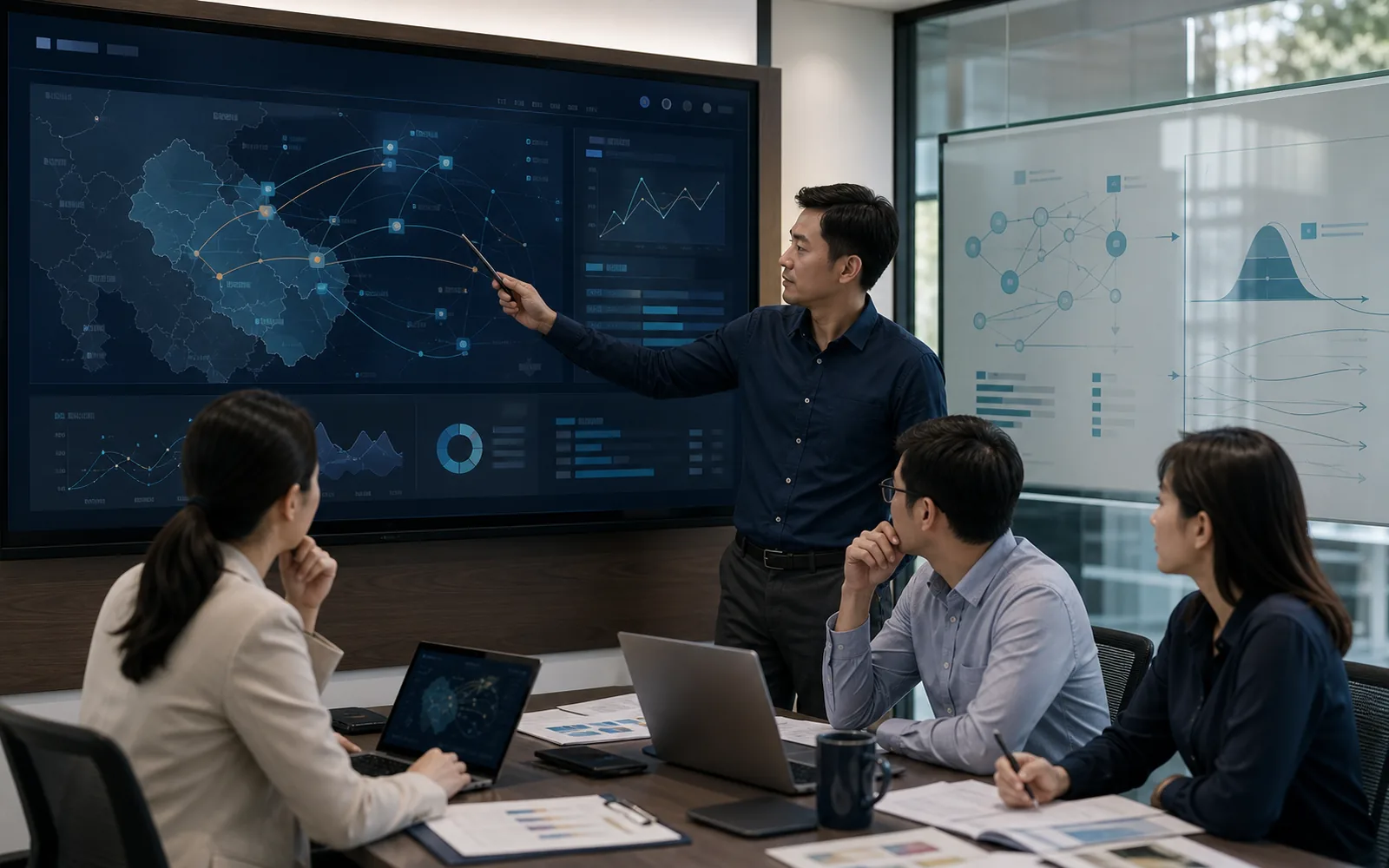
Security work requires decisions under high uncertainty; decision-support systems make the process more transparent.
The role of simulation
- Test hypotheses and options systematically
- See the impact of variables before acting
Principles we hold
Design the model with domain experts, use verifiable data, and avoid real military insignia, so it stays a neutral analytical tool.
Decisions under uncertainty need visible assumptions
Security research often involves incomplete information, high stakes, and many stakeholders. A decision-support system should not present a single answer. It should make assumptions, variables, options, and possible impacts visible.
Good simulation lets teams ask what changes if a variable moves, and which options are most sensitive to uncertainty. This reduces reliance on instinct or individual experience alone.
Useful system components
- A scenario library explaining context and assumptions
- A variable map showing relationships between factors
- An option matrix that compares choices against shared criteria
- A risk register with likelihood and impact
- After-action review notes capturing what the team learned
Neutrality matters more than spectacle
Scenario systems are often made to look like games or command centers. For research, the system must be transparent and explainable before it is dramatic. Avoid real insignia, classified data, or imagery that implies real operations when the purpose is academic or policy analysis.
The role of experts
Domain experts should define variables and test whether outputs are plausible. The system helps compare options consistently. When both work together, simulation becomes a shared learning space rather than a machine that decides for people.